
It’s a common thought process for many parents: “They’re just going to fall out anyway, so why stress over a little cavity?”
It makes sense on the surface. Why invest time, tears, and dental visits into a set of 20 teeth that are destined for the tooth fairy anyway?
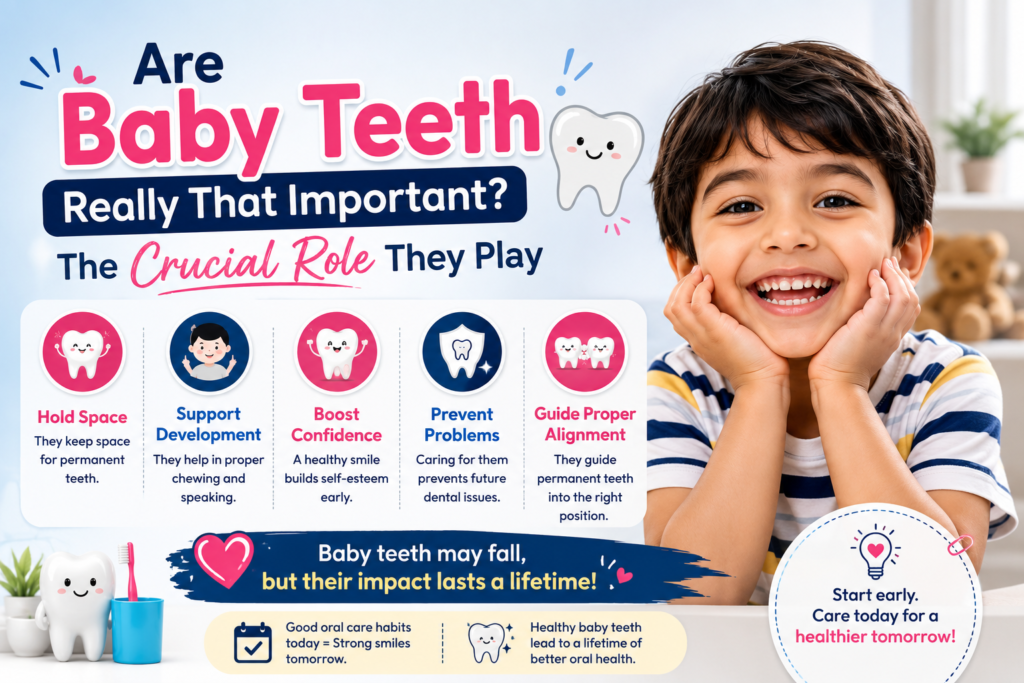
But pediatric dentists and dental researchers have a very clear answer: baby teeth are absolutely critical to your child’s current and future health. They aren’t just placeholders; they are the literal foundation for a lifetime of healthy smiles.
Here is why those tiny teeth carry such a massive responsibility.
1. The Ultimate GPS for Permanent Teeth
Think of baby teeth as a highly sophisticated guidance system. Beneath your child’s gums, their permanent teeth are slowly developing. The roots of baby teeth serve as a roadmap, saving the exact right amount of space and guiding the adult teeth into their correct positions.
When a baby tooth is lost too early due to decay or injury, the surrounding teeth don’t just stay put—they drift into the empty space.
The Domino Effect: If a primary molar drifts forward, it blocks the adult tooth underneath from erupting correctly. This leads to severe crowding, crooked alignment, and often requires extensive, costly orthodontic work (like braces or space maintainers) down the road.
2. Setting Up Proper Nutrition and Digestion
Growth requires fuel, and children need a varied diet of fruits, vegetables, grains, and meats to develop properly. Healthy teeth allow children to chew efficiently and without pain.
If a child has dental decay, chewing hurts. As a result, they will naturally avoid hard, crunchy, or fibrous foods—which happen to be some of the most nutrient-dense options. Instead, they shift toward soft foods that are often highly processed and easier to chew, completely throwing off their nutrition. Furthermore, proper chewing is the first step of digestion; unchewed food puts an unnecessary strain on a child’s developing gastrointestinal system.
3. The Blueprint for Speech Development
Learning to speak is an incredibly complex muscular feat. To form words correctly, a child’s tongue must push against their teeth and the roof of their mouth to create specific shapes and control airflow.
Try saying words with “th,” “f,” “v,” “s,” or “l” sounds without letting your tongue touch your teeth. It’s nearly impossible. Children who lose their front baby teeth prematurely often struggle with lisps, pronunciation errors, and speech delays that can take years of speech therapy to correct.
4. Protecting Against Hidden Infections
Tooth decay is a bacterial infection. Because baby teeth have much thinner enamel (the hard outer shell) and smaller roots than adult teeth, cavities move fast.
What starts as a tiny spot can quickly reach the inner nerve of the tooth. This leads to:
Severe, throbbing pain that disrupts sleep and school focus.
Dental abscesses (painful pockets of pus caused by infection).
Risk to permanent teeth: An infection at the root of a baby tooth can permanently stain or damage the adult tooth developing directly underneath it.
How to Protect That Temporary Smile
The good news is that caring for baby teeth builds the exact habits your child will need for their permanent ones.
Start early: Even before teeth appear, wipe your baby’s gums with a clean, damp cloth after feedings.
First visit by first birthday: The American Academy of Pediatric Dentistry recommends establishing a “dental home” by age one.
Ditch the bedtime bottle: Never put your baby to bed with a bottle of milk or juice. The sugars pool around the teeth all night, causing a aggressive condition known as “baby bottle tooth decay.”
Brush together: Children don’t have the manual dexterity to brush effectively on their own until they can tie their own shoes (around age 6 or 7). Guard their smile by brushing for them or double-checking their work.