
The Enamel Shield: Why It Matters
Tooth enamel is the outermost layer of your teeth and the hardest substance in the human body—even tougher than bone. Composed primarily of minerals like calcium and phosphate, enamel acts as a protective suit of armor shielding the sensitive inner layers (dentin and pulp) from bacteria, temperature extremes, and physical wear.
However, enamel doesn’t contain living cells, meaning it cannot regenerate on its own once it is lost or damaged. When acids from food and bacteria strip away its minerals—a process called demineralization—your teeth become vulnerable. Fortunately, your body can reverse early damage through remineralization, a process largely fueled by the nutrients you consume.
The Good Guys: Foods That Strengthen and Protect Enamel
1. Dairy Products (Milk, Cheese, and Yogurt)
Why they work: Dairy is packed with calcium and phosphate, the exact minerals that rebuild enamel. Cheese also raises the pH level in your mouth, reducing acidity and stimulating saliva production, which washes away food particles.
2. Crunchy Fruits and Vegetables (Apples, Carrots, and Celery)
Why they work: These foods require heavy chewing, acting like a natural toothbrush that scrapes away plaque and food debris. Their high water content also stimulates a rush of saliva, your mouth’s natural defense mechanism against cavities.
3. Leafy Greens (Spinach, Kale, and Collard Greens)
Why they work: Loaded with calcium, folic acid, and essential vitamins, greens strengthen teeth while requiring minimal effort to chew, promoting overall oral health.
4. Nuts and Seeds (Almonds, Cashews, and Sesame Seeds)
Why they work: Low in sugar and high in calcium and phosphorus, nuts like almonds are fantastic for neutralizing mouth acids. Sesame seeds can even help scrub away plaque while providing a mineral boost.
5. Water (Fluoridated)
Why it works: Water is the ultimate drink for your teeth. It keeps saliva flowing and washes away lingering sugars and acids. If your tap water contains fluoride, it also actively helps remineralize weakened enamel.
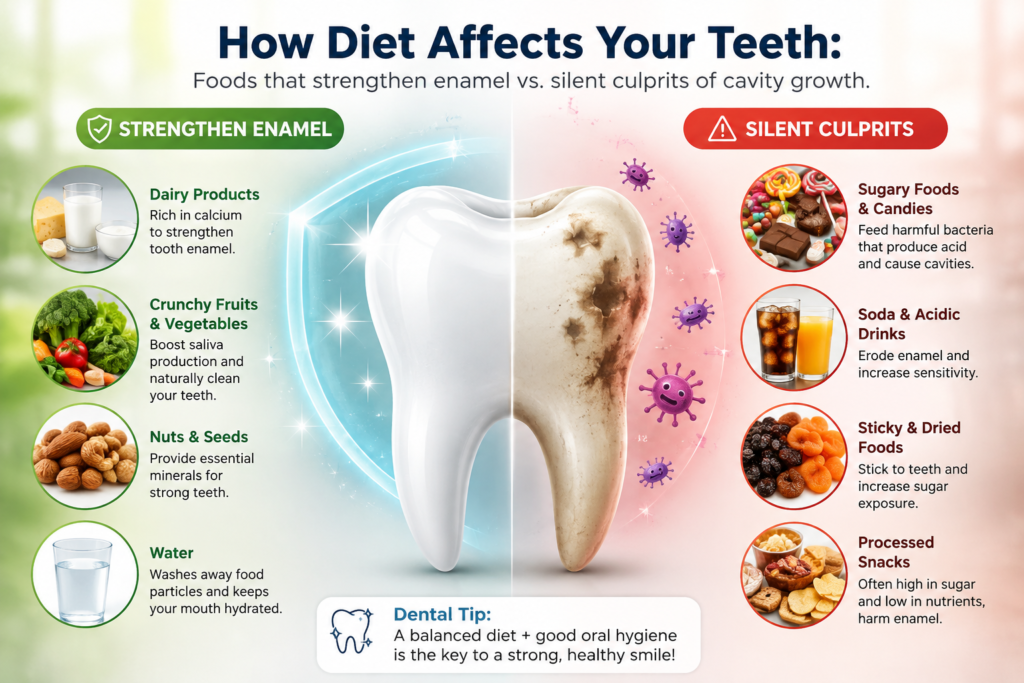
The Anatomy of a Smile: Why Tooth Enamel Matters
Enamel is the outermost, visible layer of your teeth. Composed primarily of tightly packed mineral crystals (hydroxyapatite) made of calcium and phosphate, enamel is the hardest substance in the human body—even tougher than bone. It acts as a protective suit of armor, shielding the sensitive inner layers of the tooth—the dentin and the living pulp—from extreme temperatures, physical wear, and bacterial invasion.
However, enamel possesses one critical flaw: it does not contain living cells, meaning it cannot regenerate on its own once it is lost or severely damaged.
Your teeth are locked in a continuous, lifelong tug-of-war between two opposing biological processes:
Demineralization: When acids produced by oral bacteria (or introduced via acidic foods) strip away essential minerals from your enamel, weakening its structural integrity.
Remineralization: When minerals from your saliva, diet, and fluoride sources are redeposited back into the enamel, repairing microscopic damage before a cavity can form.
Your daily diet dictates which of these two processes wins the day.
How Diet Affects Your Teeth: Foods That Strengthen Enamel vs. Silent Culprits of Cavity Growth
Your smile is often the first thing people notice, but long before a cavity makes its presence known with a sharp, throbbing ache, a silent, microscopic battle is happening inside your mouth. Every single day, the foods and beverages you consume act either as the building blocks that fortify your smile or as the fuel that feeds decay-causing bacteria.
While most of us associate dental health strictly with brushing, flossing, and visiting the dentist every six months, the true foundation of a healthy smile begins in the kitchen. Understanding the direct biochemical link between your plate and your oral health is the most powerful tool you have for maintaining a lifetime of strong, beautiful teeth.
The Science of Decay: How Food Feeds the Enemy
Your mouth is home to hundreds of species of bacteria, forming a complex ecosystem known as the oral microbiome. Most of these bacteria are harmless or even beneficial, but certain strains—most notably Streptococcus mutans—have a massive sweet tooth.
When you consume carbohydrates, sugars, and starches, these bacteria feast on the microscopic residue left behind on your teeth. As they digest these sugars, they produce lactic acid as a byproduct. This acid creates a localized acidic environment in your mouth (dropping the pH below 5.5), which instantly triggers the demineralization process.
If this acid attack happens frequently throughout the day without giving your saliva time to neutralize it, the enamel breaks down entirely, forming a microscopic hole—a cavity.
Strategic Eating: Smart Habits for a Lifelong Healthy Smile
What you put in your mouth is only half the battle; how and when you eat dictates how your teeth handle your diet. Incorporating these simple behavioral habits can dramatically reduce your risk of decay:
Avoid Grazing All Day: Every time you eat or drink anything other than plain water (even a tiny sip of juice or a single mint), your mouth’s pH drops, and an acid attack begins, lasting roughly 30 minutes. Constant snacking means your teeth never get a chance to recover or remineralize. Stick to structured meals and allow your saliva time to restore balance between eating sessions.
Chew Sugar-Free Gum with Xylitol: Popping a piece of xylitol-sweetened gum after a meal stimulates a massive surge of saliva. Xylitol is a natural sugar alcohol that actively inhibits the growth of Streptococcus mutans, preventing bacteria from producing plaque-forming acids.
The 30-Minute Brushing Rule: If you consume something acidic (such as citrus fruits, coffee, wine, or tomatoes), do not brush your teeth immediately. Acid temporarily softens your enamel. Brushing right away acts like sandpaper, scrubbing away microscopic layers of softened enamel. Wait at least 30 minutes to let your saliva naturally neutralize the acid and re-harden the surface before picking up your toothbrush.
The Silent Culprits: Surprising Foods That Fuel Cavity Growth
While everyone knows that soda, caramel candies, and frosted donuts are terrible for your teeth, many people are blindsided by cavities because they consume “healthy” or everyday foods that act as sneaky, silent culprits.
Starchy, Sticky Foods (Potato Chips, White Bread, and Crackers)
You might not think of a saltine cracker or a potato chip as a “sugar bomb,” but refined starches are composed of long chains of glucose molecules. Enzymes in your saliva instantly break these starches down into simple sugars.
The Danger: When chewed, these foods turn into a gummy, pasty sludge that wedges tightly between your teeth and deep inside the occlusal grooves of your molars. This paste lingers for hours, feeding bacteria long after you have put your fork down.
Dried Fruits (Raisins, Apricots, Figs, and Mango Slices)
Dried fruit is frequently marketed as a healthy, wholesome snack—and nutritionally, it contains vitamins and fiber. However, from a dental standpoint, dried fruit is a cavity nightmare.
The Danger: The dehydration process concentrates the fruit’s natural sugars into a dense, sticky matrix. When you eat dried fruit, it glues itself stubbornly to the surface and crevices of your teeth. Because it doesn’t wash away easily, it bathes your enamel in concentrated sugar for hours, creating a prolonged window for bacterial acid production.
Citrus Fruits and Juices (Lemons, Limes, Oranges, and Grapefruit)
Rich in Vitamin C and antioxidants, citrus fruits are fantastic for your immune system, but their chemical makeup is harsh on teeth.
The Danger: Citrus fruits are intensely acidic. Frequent exposure to this high acidity softens and weakens the outer layer of enamel, temporarily eroding its mineral structure. (Smart workaround: Enjoy citrus in moderation, consider using a straw to bypass your teeth, and always rinse your mouth with plain water afterward—never brush immediately after consuming citrus.)