
Hearing that you need treatment for moderate-to-advanced gum (periodontal) disease can trigger anxiety. For decades, the phrase “gum surgery” conjured up intimidating images of scalpels, stitches, bleeding, and long, painful recovery periods.
Fortunately, modern dental technology has changed the game. Today, patients facing gum disease often have a choice between Traditional Periodontal Surgery and LANAP (Laser-Assisted New Attachment Procedure).
If you are weighing your options, understanding how these two approaches compare can help you make an informed decision for your smile.
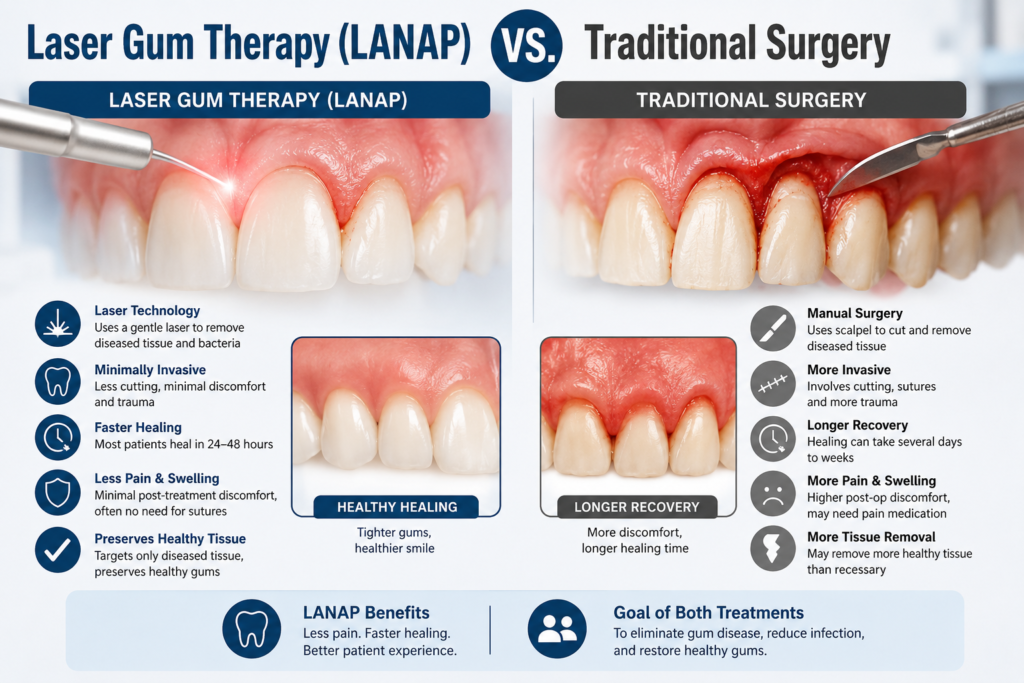
What is Traditional Gum Surgery?
Traditional gum surgery (often involving pocket reduction or flap surgery) is a tried-and-true method that has been used by dental professionals for generations.
The Process: The periodontist uses a scalpel to make incisions in the gum tissue, gently cutting and pulling the gums away from the teeth to expose the roots and underlying jawbone.
Cleaning and Scaling: Once the area is fully exposed, the dentist thoroughly cleans out bacteria, plaque, and tartar buildup from deep pockets and diseased root surfaces.
Suturing: Afterward, the remaining gum tissue is placed back into position and secured with stitches (sutures).
Pros & Cons of Traditional Surgery
Pros: Highly effective at eliminating deep-seated bacterial infections; deeply researched and widely practiced.
Cons: Involves scalpels, significant bleeding, stitches, noticeable post-operative discomfort, and a higher risk of gum recession (which can make teeth look longer and feel more sensitive).
What is LANAP (Laser Gum Therapy)?
LANAP is an FDA-cleared, advanced laser protocol designed to treat periodontal disease with unprecedented precision and minimal physical trauma.
The Process: Instead of a scalpel, LANAP utilizes a specialized dental laser (such as the PerioLase MVP-7) inserted into the tiny space between your tooth and gum.
Targeted Removal: The laser is uniquely calibrated to seek out and vaporize dark-colored bacteria and diseased tissue without harming healthy, pink gum tissue.
The Natural Seal: The laser sterilizes the pocket and encourages a biological blood-clot seal around the root, meaning no incisions and no sutures are required.
Pros & Cons of LANAP
Pros: Virtually pain-free recovery, minimal bleeding, no stitches, preserved gum line aesthetics (less recession), and a unique ability to stimulate bone and tissue regeneration.
Cons: Requires specialized training and certified equipment, meaning it may not be available at every standard dental office.
Head-to-Head Comparison
| Feature | Traditional Gum Surgery | LANAP Laser Therapy |
| Tools Used | Scalpels and surgical blades | Precision dental laser fiber |
| Incision & Stitches | Yes (requires cutting and suturing) | None (no cuts, no stitches) |
| Pain & Discomfort | Moderate to high; requires prescription painkillers | Mild; typically managed with over-the-counter medication |
| Recovery Time | Several weeks of restricted activity and diet | Immediate; most patients return to normal routine the next day |
| Gum Recession | Common (can expose roots and increase sensitivity) | Minimal to none (preserves natural gum line) |
| Bone Regeneration | Rare/limited; primarily stops disease progression | Proven capability to stimulate and regrow lost bone |
Why LANAP is Revolutionizing Patient Care
The biggest hurdle keeping people from treating their gum disease has always been fear of the scalpel. LANAP removes that mental barrier by working with your body’s natural healing abilities instead of against them.
Furthermore, traditional surgery often leaves patients with a “long-toothed” appearance because the gum line drops as it heals. Because LANAP targets only the diseased tissue selectively, your natural smile aesthetics are much better protected.
Perhaps most excitingly, clinical studies show that LANAP is the only protocol of its kind capable of true periodontal regeneration—meaning it can help your body regrow the alveolar bone that was destroyed by chronic infection.
Which Treatment is Right for You?
While LANAP offers incredible advantages in comfort, healing time, and tissue preservation, the right choice ultimately depends on the unique severity of your periodontal condition and your overall oral health.
If you want to protect your gums, avoid scalpels, and get back to your routine quickly, asking your periodontist about LANAP is a great first step.
Are you currently weighing your options for gum treatment, or do you have questions about how laser dentistry works? Let’s talk about it in the comments below!