
We all know the cardinal rules of oral hygiene: brush twice a day, floss regularly, and try not to live on a diet of pure candy. But what if you’re doing everything “right” and still noticing tooth sensitivity, discoloration, or tiny chips?
The culprit might be enamel erosion.
Tooth enamel is the hard, protective outer shell of your teeth. In fact, it’s the hardest substance in the human body! But despite its strength, once enamel wears away, your body can’t regenerate it.
Here are 7 surprising daily habits that could be quietly wearing down your enamel—and how to fix them before the damage is done.
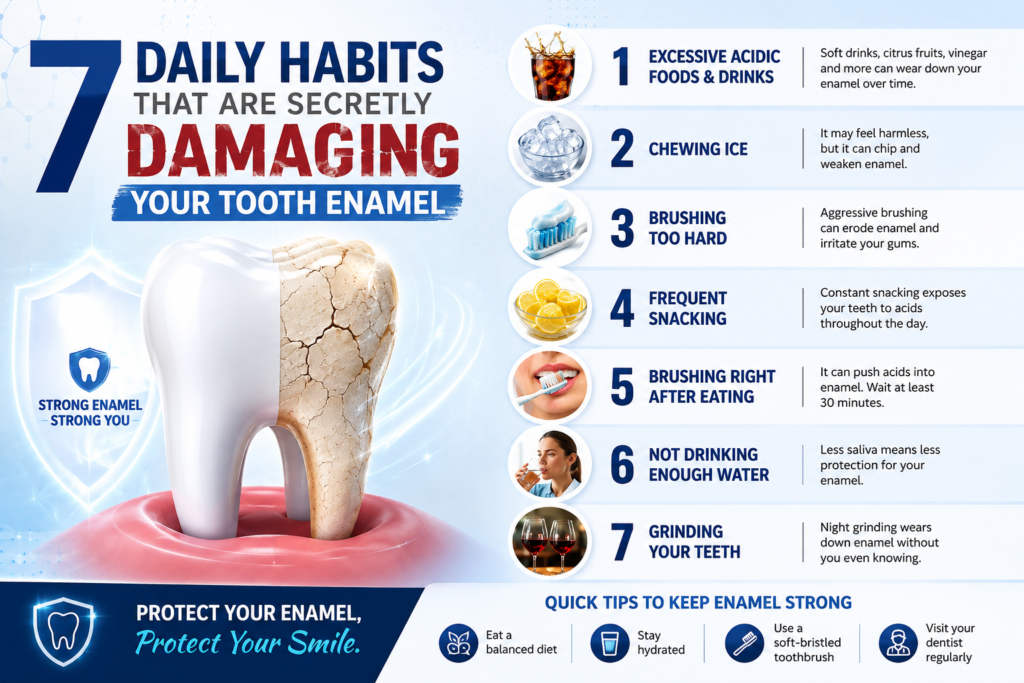
1. Brushing Right After You Eat (Especially Acidic Foods)
It feels counterintuitive—isn’t brushing after a meal responsible?
When you drink citrus juice, coffee, or eat fruits like tomatoes and berries, the acids temporarily soften your enamel. If you grab your toothbrush immediately, you’re essentially scrubbing away weakened enamel with an abrasive paste.
The Fix: Wait at least 30 minutes after eating before you brush. In the meantime, rinse your mouth with plain water to help wash away acids and restore a neutral pH.
2. Sipping Water with Lemon or Sparkling Water All Day
Drinking water is great for your health, but flavored or carbonated options carry a hidden downside.
Adding lemon to your water introduces citric acid. Carbonated water (even unflavored) contains carbonic acid from the carbonation process. Sipping these slowly over hours keeps your mouth in a constant acidic state, giving your saliva no chance to naturally neutralize the environment.
The Fix: Enjoy your sparkling or lemon water with meals rather than sipping it constantly throughout the day. Drinking through a straw also reduces contact with your front teeth.
3. Scrubbing Your Teeth Too Hard
Brushing harder doesn’t mean your teeth are getting cleaner. Using a toothbrush with hard bristles or applying too much pressure acts like sandpaper on your enamel over time—and it can cause your gums to recede, exposing sensitive root areas.
The Fix: Switch to a soft-bristled toothbrush (or an electric brush with a pressure sensor). Use gentle, circular motions as if you’re polishing an eggshell, not scrubbing a dirty pot.
4. Crunching on Ice
It’s a common habit, especially on hot days or when you’re bored at your desk. However, biting down on frozen, hard ice cubes creates intense physical pressure alongside extreme temperature changes. This combination can cause invisible micro-cracks in your enamel, eventually leading to bigger fractures.
The Fix: Swap ice for sugar-free gum if you need a chewing fix, or let ice melt in your mouth rather than crunching it.
5. Using Your Teeth as Tools
Opening a bag of chips with your teeth, tearing off clothing tags, or holding keys in your mouth might save a few seconds, but it’s a fast track to chipped enamel. Teeth are designed for chewing food, not replacing scissors or pliers.
The Fix: Keep a small pair of scissors handy in your desk or kitchen drawer so you aren’t tempted to use your teeth.
6. Constant Snacking and Grazing
Every time you eat—especially carbohydrates or sugary snacks—the bacteria in your mouth feed on those sugars and produce acid as a byproduct. This acid attack lasts for about 20 minutes after you stop eating. If you snack every hour, your enamel is subjected to a non-stop acid bath.
The Fix: Stick to dedicated meal times and limit grazing. If you do snack, choose enamel-friendly foods like nuts, cheese, or raw vegetables that promote saliva flow without spiking acidity.
7. Unconscious Night Grinding (Bruxism)
Clenching or grinding your teeth while you sleep puts immense force on your enamel—far more than normal chewing. Over time, grinding can flatten the chewing surfaces of your teeth, wear away the enamel layer, and cause micro-cracks.
The Fix: If you wake up with a sore jaw, dull headache, or heightened tooth sensitivity, talk to your dentist. A custom nightguard creates a soft barrier that protects your enamel from friction while you sleep.
Simple Ways to Keep Your Enamel Strong
You don’t need to completely overhaul your life to keep your enamel intact. A few minor tweaks can make a world of difference:
-
Use a fluoride or hydroxyapatite toothpaste to aid remineralization.
-
Drink plenty of plain water throughout the day to support healthy saliva production.
-
Chew sugar-free xylitol gum after meals to stimulate saliva, which naturally buffers acid and restores minerals to your teeth.