
Leaving the dentist with a lopsided smile and a frozen lip is practically a rite of passage. Whether you just had a routine filling or a major root canal, that “puffy,” heavy sensation in your face can be weird, annoying, and down-right inconvenient when you just want to eat lunch or make a phone call without slurring your words.
So, how long are you stuck feeling like half your face belongs to someone else? And is there anything you can actually do to speed up the process? Here is everything you need to know about the timeline of local anesthesia and how to help it wear off safely.
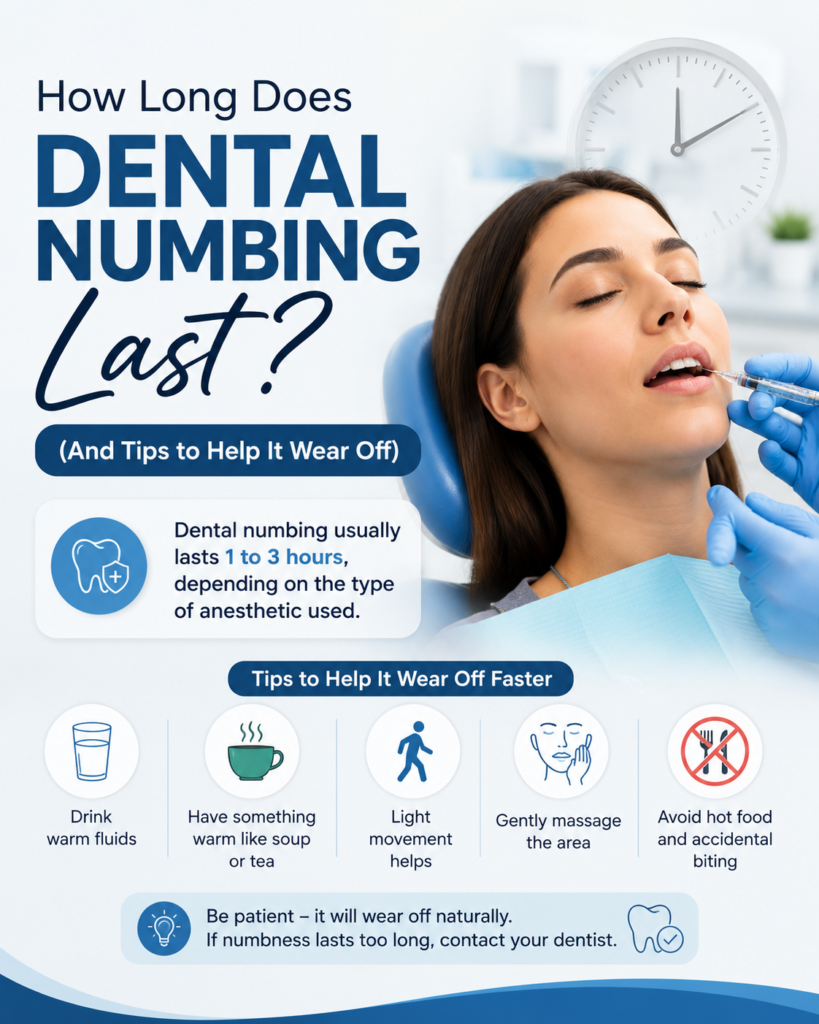
How Long Does the Numbness Actually Last?
For most standard dental procedures, soft tissue numbness (your lips, cheek, and tongue) typically lasts between 2 to 4 hours after you leave the chair.
However, it helps to know that tooth numbness and soft tissue numbness wear off at different rates. Your actual teeth usually regain feeling within 1 to 2 hours, but the surrounding soft tissues (where blood flows more heavily) stay numb significantly longer.
Why Duration Varies from Person to Person
Ever wonder why your friend’s numbing wears off in an hour, but yours lingers all afternoon? Several factors dictate the timeline:
The Type of Local Anesthetic: While people often use “Novocaine” as a catch-all, modern dentists typically use medications like Lidocaine, Articaine, or Bupivacaine. Short-acting agents fade in 1–2 hours, while long-acting ones (often used for complex surgeries) can last 6 to 8 hours.
Epinephrine Content: Most dental anesthetics contain a tiny amount of epinephrine (adrenaline). It constricts nearby blood vessels so the numbing agent stays localized longer and keeps you pain-free during the procedure.
Location in Your Mouth: Lower jaw injections (like a mandibular block) usually take longer to wear off than upper jaw injections. The nerve pathways serving your bottom teeth are larger, requiring deeper numbing.
Your Body’s Metabolism: How fast your body breaks down and flushes out the medication depends on your individual metabolic rate, physical activity levels, and overall health.
5 Safe Ways to Help Dental Numbing Wear Off Faster
To get local anesthesia out of your system, your body needs to process it through your bloodstream. The secret to speeding things up is safely boosting blood circulation to your face.
Here are the best ways to encourage that process:
1. Light Physical Activity
If you didn’t have major oral surgery (like wisdom teeth extraction, where rest is required to avoid bleeding), go for a brisk walk. Light movement gets your heart pumping, which speeds up general circulation and flushes the anesthetic out of the tissue much faster.
2. Apply a Warm Compress
Apply a warm (not hot) washcloth or heating pad to the outside of your cheek for 10–15 minutes at a time. The gentle warmth dilates blood vessels, increasing blood flow to the area.
3. Gentle Facial Massage
Using your fingertips, massage your cheeks, jaw, and lips using soft, circular motions. This manually stimulates localized blood flow. Just keep it light—don’t press hard near the site of recent dental work.
4. Talk or Move Your Jaw
Moving your facial muscles—by talking, gently opening and closing your mouth, or doing soft neck stretches—gets blood moving through the facial tissue. You might sound a little goofy trying to converse, but it actually helps!
5. Ask Your Dentist About Reversal Injections
If you have an important meeting or dinner right after your appointment, ask your dentist ahead of time if they offer an anesthesia reversal agent (such as OraVerse). Injected right at the end of your procedure, it can cut your recovery time in half.
What NOT to Do While You're Numb
While waiting for sensation to return, avoid these common pitfalls:
Don’t chew solid food: It is shockingly easy to bite through your cheek, lip, or tongue without realizing it until the numb feeling wears off and the pain sets in. Stick to smooth, cool liquids or soft items like yogurt, applesauce, or smoothies until full feeling returns.
Avoid hot beverages: Hot coffee, tea, or soup can cause severe oral burns when temperature receptors are temporarily turned off.
Don’t touch or pick at the area: It might feel like your lip is swollen to the size of a balloon (even though it looks totally normal in the mirror!). Resisting the urge to constantly pull, pinch, or scratch at it prevents accidental tissue damage.