
The Art of Perfection: Understanding Enamel Sculpting & Contouring for a Flawless Smile
A radiant smile is often considered one of a person’s most attractive assets. It conveys confidence, warmth, and vitality. However, even minor imperfections—such as a slightly chipped tooth, subtle unevenness, or overly sharp edges—can make someone feel self-conscious. While full cosmetic procedures like porcelain veneers or orthodontic clear aligners offer dramatic transformations, they often require significant time, financial investment, and structural modification to the teeth.
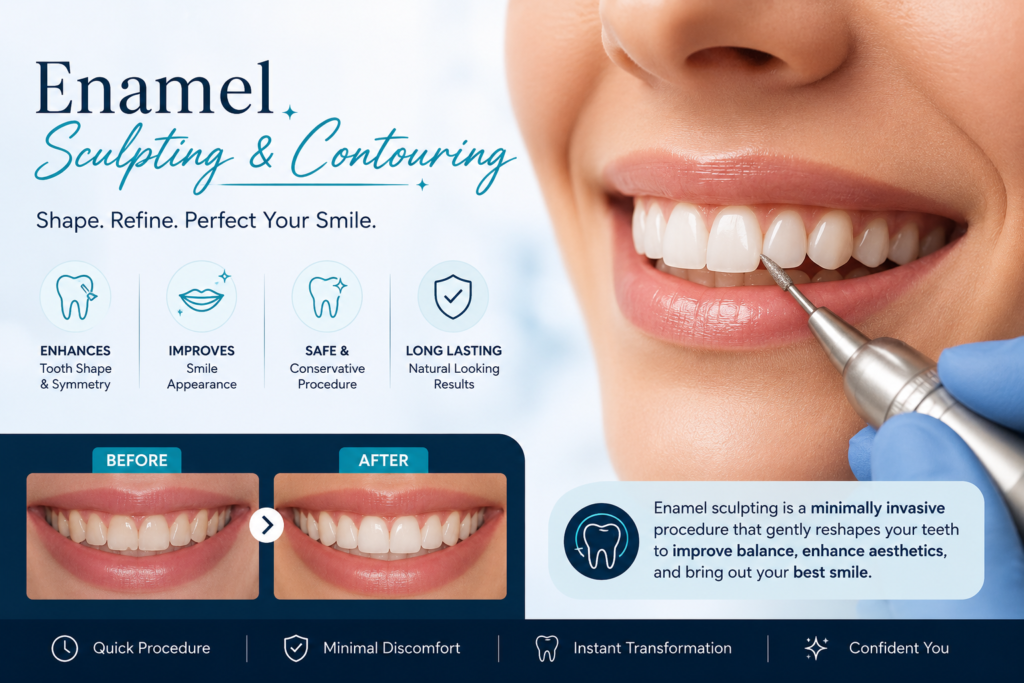
For those seeking an immediate, non-invasive, and cost-effective way to enhance their smile, Enamel Sculpting & Contouring (also known as odontoplasty, enameloplasty, or tooth reshaping) provides an elegant solution. This gentle cosmetic dental procedure subtly modifies the shape, length, or surface of your teeth to create a balanced, harmonious appearance.
What is Enamel Sculpting & Contouring?
Enamel sculpting and contouring is a conservative cosmetic dental technique used to remove tiny amounts of tooth enamel to alter a tooth’s shape, length, or surface texture. Tooth enamel is the hard, outer layer of the tooth that protects the delicate inner structures like the dentin and pulp. Because enamel contains no nerves, removing minute fractions of a millimeter is completely painless.
This procedure is frequently combined with dental bonding—a technique where a tooth-colored composite resin is applied to fill gaps, build up worn areas, or fix deeper chips. Together, contouring and bonding act as a artistic duo, sculpting the enamel while building back missing contours for a natural result.
The Key Benefits of Tooth Reshaping
Enameloplasty has grown in popularity due to its simplicity and immediate benefits. Here is why many patients choose this procedure:
The Key Benefits of Tooth Reshaping
Instant Gratification: Unlike braces or clear aligners that take months to yield results, enamel contouring is completed in a single appointment, often taking less than 30 to 60 minutes.
Pain-Free & Non-Invasive: Because the procedure only touches the outermost enamel layer, local anesthesia is usually unnecessary. There are no needles, no drills cutting into inner tooth structure, and zero recovery downtime.
Preserves Natural Tooth Structure: Traditional crowns or veneers require removing a substantial portion of natural tooth material. Contouring preserves almost all of your original tooth structure.
Improved Oral Hygiene: Overlapping, jagged, or unusually shaped teeth can create hard-to-reach crevices where plaque and tartar accumulate. By smoothing out these rough edges and overlap, contouring makes brushing and flossing significantly more effective, reducing your risk of decay and gum disease.
Cost-Effective Cosmetic Upgrade: Compared to veneers or orthodontic care, enamel sculpting is highly affordable, making cosmetic dental touch-ups accessible to a wider range of patients.
Am I an Ideal Candidate for Enamel Contouring?
While tooth reshaping offers remarkable cosmetic benefits, it is not a substitute for extensive orthodontic or restorative work. It is best suited for subtle, minor cosmetic adjustments.
Ideal candidates typically have:
Slightly Uneven Teeth: Teeth that are subtly misaligned, uneven in length, or slightly asymmetrical.
Minor Chips or Rough Edges: Small fractures or jagged points along the biting edges of the front teeth.
Overly Pointy Canines: Sharp, exaggerated canine teeth that can be softened for a gentler smile aesthetic.
Subtle Overlapping: Minor crowding or overlap where removing a fraction of enamel allows teeth to sit better alongside one another.
Pits or Surface Bumps: Tiny ridges, bumps (mammelons), or enamel irregularities on the surface of the teeth.
Who should explore alternative treatments?
Because contouring removes permanent enamel, candidates must have healthy, strong teeth with adequate enamel thickness. Individuals with thin enamel, deep cavities, active gum disease, root exposure, or severe misalignments are better suited for alternatives like orthodontic treatment, crowns, or composite bonding without enamel removal.
The process of enamel sculpting is straightforward, precise, and artful. Here is what happens step-by-step:
1. Evaluation & Digital Imaging
Before any reshaping occurs, your dentist performs a thorough examination. X-rays are often taken to evaluate the thickness of the enamel layer and check the location of the inner pulp (nerve chamber) to ensure that removing surface enamel will not compromise tooth health.
2. Planning & Marking
Using special dental marking tools, your dentist carefully outlines the exact areas of the tooth that need adjustment. This step serves as a visual guide to ensure symmetry and proportion across your entire smile line.
3. Sculpting and Reshaping
Using specialized fine-grit diamond burs or sanding discs, the dentist gently removes micron-level layers of enamel. You will feel light vibration and pressure, but no pain.
4. Smoothing & Polishing
Once the ideal shape is achieved, the newly sculpted surfaces are meticulously smoothed and polished using finishing discs and polishing pastes. This restores the natural gloss and sheen of your tooth, making it look seamless next to neighboring teeth.
Aftercare: Maintaining Your Sculpted Smile
Because enamel does not grow back, protecting your newly contoured teeth is important to keep your smile healthy and bright:
Maintain Good Oral Hygiene: Continue brushing twice daily with fluoride toothpaste and flossing daily to keep the smoothed enamel surfaces free of plaque.
Avoid Hard Foods: Do not chew on ice, hard candies, pen caps, or fingernails, as this can chip freshly sculpted edges.
Manage Teeth Grinding (Bruxism): If you grind your teeth at night, ask your dentist for a custom nightguard. Excessive force can quickly wear down thin enamel.
Limit Acidic Drinks: Acidic beverages like soda, citrus juices, and energy drinks can weaken enamel over time. Drink water afterward to rinse away acids.
Conclusion
Enamel sculpting and contouring proves that massive transformations do not always require aggressive interventions. By making micro-adjustments to the shape, length, and texture of your teeth, this quick and pain-free procedure can dramatically enhance your smile’s harmony and balance.
If minor chips, sharp edges, or slight unevenness are keeping you from smiling with full confidence, consult with your dentist to see if enamel sculpting is the right fit for your cosmetic goals.