
The Root Cause of Gum Sensitivity: Unveiling the Truth Behind Dental Discomfort
Imagine sitting down to enjoy a warm cup of coffee on a chilly morning or biting into a refreshing scoop of ice cream on a hot afternoon, only to be struck by a sudden, sharp, and agonizing jolt of pain. For millions of people worldwide, this fleeting yet intense discomfort is an all-too-familiar experience. Commonly referred to as tooth or gum sensitivity, this phenomenon can instantly ruin the simple pleasure of eating and drinking.
While many people brush off sensitivity as a minor annoyance, it is actually a vital warning signal from your body. To truly fix the problem, you have to look beyond temporary relief and uncover the root causes. At the heart of most sensitivity issues lies a breakdown in the protective barriers of your teeth and gums, exposing the sensitive structures hidden underneath.
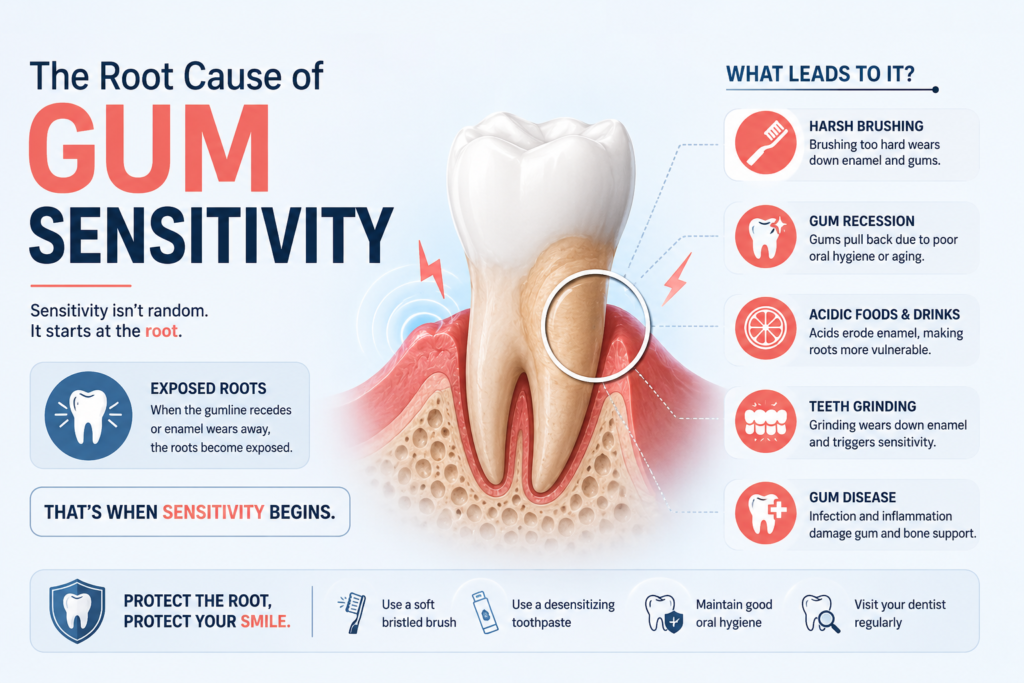
Anatomy of a Tooth: Where Does the Pain Come From?
To understand why your gums and teeth hurt, it helps to take a brief look at tooth anatomy.
-
The Crown and Enamel: The part of the tooth visible above the gumline is covered by enamel, the hardest substance in the human body. Enamel contains no nerves, meaning it can withstand heavy chewing and temperature extremes without feeling a thing.
-
The Roots and Cementum: Below the gumline, the root of the tooth is protected by a layer of tissue called cementum.
-
Dentin: Directly beneath the enamel and cementum lies dentin. Dentin is a porous, bone-like tissue filled with millions of microscopic channels called dentinal tubules. These tubules lead directly to the tooth’s central pulp, where the nerve endings reside.
When your enamel wears away or your gums recede, these dentinal tubules become exposed to the external environment. When hot, cold, sweet, or acidic stimuli touch these open channels, fluid inside the tubules moves rapidly. This movement stimulates the nerve endings in the pulp, triggering that sharp flash of pain. This process is scientifically known as dentin hypersensitivity
The Primary Root Causes of Gum and Tooth Sensitivity
1. Gum Recession (Gingival Recession)
One of the most frequent culprits of root sensitivity is gum recession. When the gum tissue pulls away from the tooth, it exposes the root surface. Unlike the visible crown, roots do not have a protective layer of hard enamel; they are covered only by a thin layer of cementum, which wears away easily. Once the root is bare, the underlying dentin is wide open to thermal and chemical irritants.
Gum recession can be triggered by several factors:
Periodontal (Gum) Disease: Bacterial infections destroy the gum tissue and supporting jawbone, causing the gums to recede.
Aging: Natural wear and tear over decades can cause gums to recede slightly.
Genetics: Some individuals naturally have thinner gum tissue, making them inherently more susceptible to recession.
2. Aggressive Tooth Brushing
Ironically, trying too hard to keep your teeth clean can actually damage them. Brushing with excessive force or using a hard-bristled toothbrush can wear down the protective enamel near the gumline and irritate or push back the gum tissue. Over time, this mechanical abrasion carves away structural tissue, exposing the sensitive dentin underneath. Dentists frequently diagnose sensitivity caused by improper brushing as toothbrush abrasion.
3. Dietary Acids and Enamel Erosion
The food and drinks you consume play a massive role in structural integrity. Highly acidic items—such as citrus fruits, tomatoes, pickles, vinegar, sodas, and sports drinks—can temporarily soften and dissolve tooth enamel.
If you brush your teeth immediately after consuming something acidic, you essentially scrub away the softened enamel layer, accelerating wear and exposing dentin. Chronic internal acids, such as those caused by acid reflux (GERD) or eating disorders, can similarly erode dental layers over time.
4. Teeth Grinding (Bruxism)
Many people unconsciously clench or grind their teeth during sleep or periods of high stress. This immense, repetitive pressure places severe stress on the teeth, causing microscopic fractures and wearing away enamel, particularly along the gumline. Once the structural armor of the tooth is compromised by bruxism, sensitivity follows closely behind.
5. Harsh Dental Products
While commercial whitening strips and charcoal toothpastes promise a dazzling smile, many abrasive whitening agents can strip away superficial layers of protection. If used too frequently, bleaching agents penetrate the enamel to target stains, sometimes leaving the nerve endings temporarily or permanently irritated and hyper-reactive.
Long-Term Implications: Why You Shouldn't Ignore It
Sensitivity is rarely just an isolated inconvenience. If left unaddressed, the root causes can snowball into severe dental complications:
Advanced Periodontitis: Untreated gum recession driven by plaque and tartar buildup can permanently destroy the bone supporting your teeth, eventually leading to tooth loss.
Root Decay: Exposed root surfaces are much softer than enamel, making them exceptionally vulnerable to cavities and decay.
Pulpitis: Chronic, unmanaged exposure can cause deep inflammation of the tooth nerve (pulpitis), eventually requiring root canal therapy.
Actionable Steps for Relief and Prevention
Fortunately, you don’t have to live in fear of your next meal. Managing gum and tooth sensitivity requires a combination of at-home care and professional dental guidance.
Pro Tip: Always consult your dentist to rule out underlying structural cracks or deep cavities before attempting to treat sensitivity on your own.
1. Switch to Desensitizing Products
Over-the-counter toothpastes formulated for sensitive teeth contain active ingredients like potassium nitrate or stannous fluoride. These compounds either block the microscopic dentinal tubules to stop fluid movement or help calm the nerve endings inside the tooth. For targeted relief, you can even dab a small amount of sensitive toothpaste directly onto the affected area with a clean finger before bed.
2. Adopt Gentle Oral Hygiene Habits
Downshift your pressure: Treat your teeth and gums like delicate fabric rather than a dirty sidewalk.
Choose soft bristles: Always use a soft-bristled or ultra-soft toothbrush, and consider switching to an electric toothbrush with a pressure sensor that alerts you when you are pressing too hard.
Modify your technique: Use gentle, circular motions rather than harsh, back-and-forth horizontal scrubbing, which worsens gum recession.
3. Protect Your Diet and Timing
Enjoy acidic foods and beverages in moderation, and try using a straw to minimize direct contact with your teeth. Most importantly, wait at least 30 to 60 minutes after consuming acidic items before brushing your teeth, giving your saliva time to naturally neutralize the acid and re-harden your enamel.
4. Address Nighttime Grinding
If you wake up with a sore jaw or dull headaches, talk to your dentist about getting a custom-fitted night guard. A mouth guard cushions your teeth, absorbing the intense forces of bruxism and protecting your enamel from abrasive wear.
5. Professional Dental Treatments
If at-home remedies aren’t cutting it, your dentist can provide clinical interventions, such as:
Fluoride varnishes or sealants applied to exposed root surfaces to strengthen the area and block pain pathways.
Dental bonding or resins to cover exposed roots where tissue has permanently receded.
Gum grafts for severe gum recession, which surgically restores protective tissue over vulnerable roots.
Conclusion
Gum and tooth sensitivity is your body’s clear, unambiguous way of telling you that its natural defenses have been compromised. By understanding the root causes—whether they stem from aggressive brushing, acidic diets, teeth grinding, or gum recession—you can take targeted steps to protect your smile. Making small, mindful adjustments to your daily routine today can save you from chronic discomfort and complex dental treatments tomorrow.