
Understanding the Difference, Causes, and Solutions
When you take a sip of ice-cold water or bite into a warm piece of apple and feel a sudden, sharp jolt of discomfort, your first instinct is usually to blame tooth sensitivity. It is an everyday dental woe that affects millions of people globally. However, tooth sensitivity is rarely a standalone condition; it is almost always a symptom of an underlying issue.
More often than not, the primary root cause behind persistent, sharp dental discomfort is gingival recession—commonly known as receding gums.
While these two terms are frequently used interchangeably by patients, they refer to two completely different aspects of oral health. Understanding the distinction between gingival recession (the structural change in your gum tissue) and tooth sensitivity (the sensory reaction you feel) is critical for protecting your smile, preserving your tooth enamel, and choosing the right long-term treatment.
1. Defining the Terms: What Is What?
To untangle the relationship between these two dental concepts, we must first look at what each term actually means in clinical dentistry.
What Is Gingival Recession?
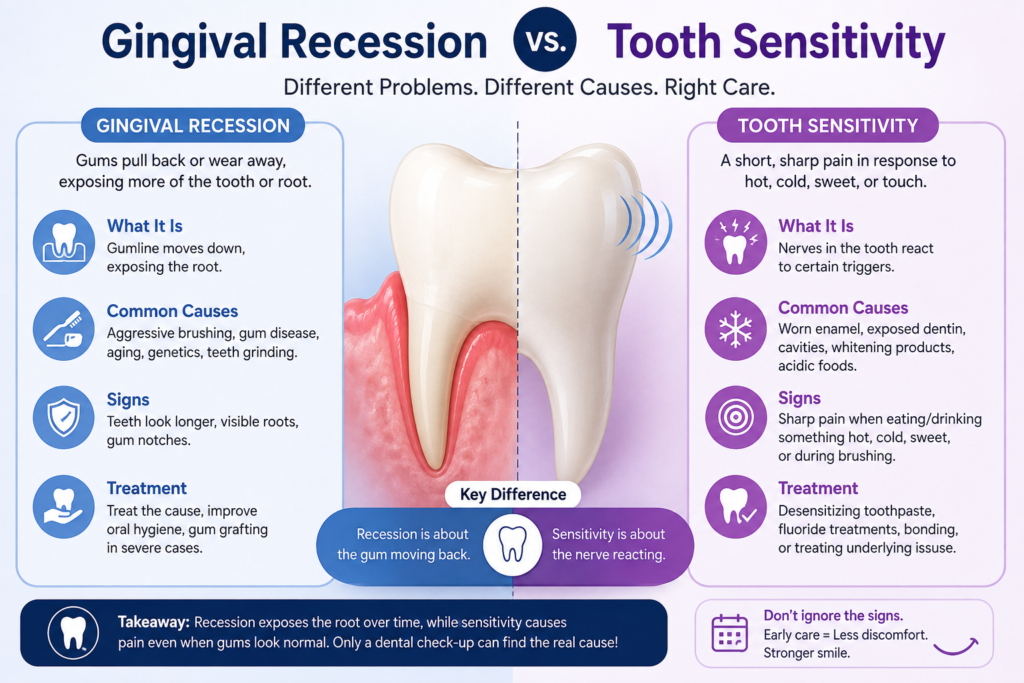
Gingival recession is a structural, anatomical condition where the margin of the gum tissue that surrounds the teeth wears away, pulls back, or detaches. When this happens, a larger portion of the tooth—or even its underlying root structure—becomes exposed.
The Anatomy Problem: Healthy gums fit snugly around the teeth like a protective turtleneck, shielding the delicate roots and nerve pathways. When recession occurs, this barrier migrates toward the base of the tooth, leaving the root surface unprotected.
Progressive Nature: Gingival recession typically happens gradually. Because it occurs slowly over months and years, many people fail to notice it until they see visible changes in their smile, such as teeth appearing “longer” or dark spaces opening up between teeth.
What Is Tooth Sensitivity?
Tooth sensitivity (scientifically known as dentin hypersensitivity) is a clinical symptom rather than a structural disease. It is the sharp, sudden pain or discomfort experienced when the underlying layer of the tooth—called dentin—is exposed to external triggers such as cold, heat, acids, sweets, or physical pressure.
-
-
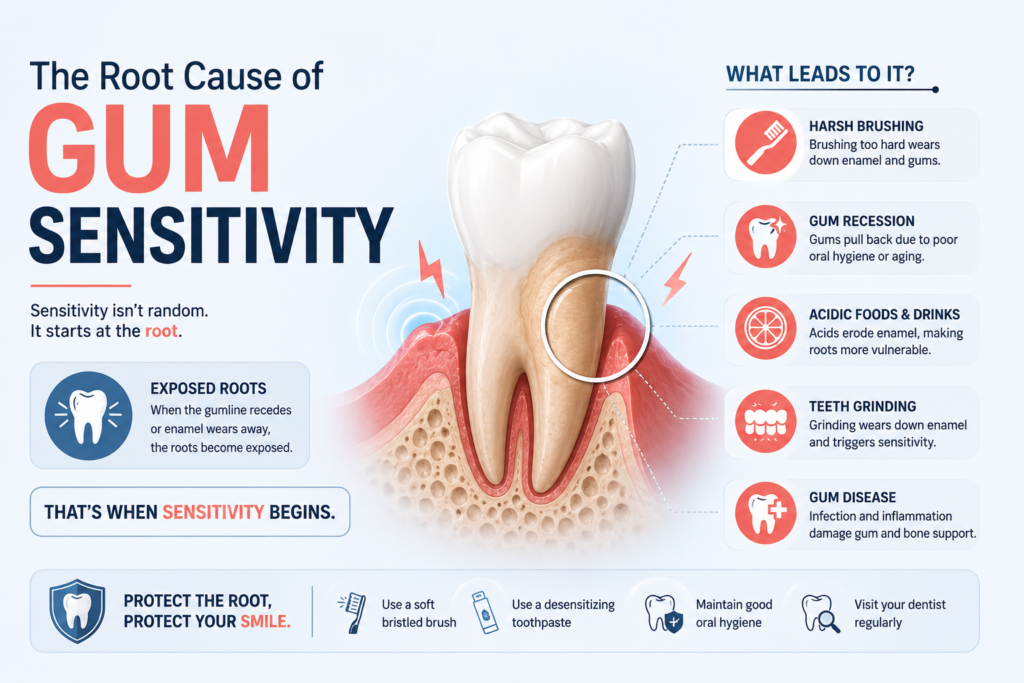
The Nerve Connection: Underneath your hard, protective outer enamel and the cementum covering the root lies the dentin. Dentin is packed with microscopic channels called dentinal tubules, which lead directly to the nerve center (pulp) at the core of the tooth.
-
The Trigger Mechanism: When the protective outer layers are compromised, stimuli like temperature changes or touch cause fluid movement within these microscopic tubules. This fluid shift stimulates the nerve endings, triggering an immediate pain signal to your brain.
The Core Relationship: Think of gingival recession as the cause (the physical exposure of the root surface), and tooth sensitivity as the effect (the neurological pain response). While tooth sensitivity can happen without recession (due to severe enamel erosion or cracks), gingival recession is the single most common pathway to chronic root sensitivity.
-
2. The Anatomy of Your Teeth and Gums
To fully grasp why receding gums trigger such intense pain, it helps to look at the structural layers of a healthy tooth and its supporting structures.
+-------------------------------------------------------------+
|                     CROWN OF THE TOOTH                      |
|  [Enamel] - Hard, non-living protective outer shell         |
+-------------------------------------------------------------+
|                      GUM LINE (Margin)                      |
+-------------------------------------------------------------+
|                     ROOT OF THE TOOTH                       |
|  [Dentin] - Microscopic tubules leading to the nerve pulp   |
|  [Cementum] - Thin, soft calcified layer covering the root  |
+-------------------------------------------------------------+
Enamel: The outermost layer of the crown. It is the hardest substance in the human body and contains no living cells or nerves. As long as enamel remains intact, your teeth are well-insulated.
Cementum: Unlike the crown, the root of the tooth is not covered in hard enamel. Instead, it is covered by a much softer, thinner mineralized tissue called cementum. Cementum is easily worn away by aggressive brushing, acidic foods, or gum disease.
Dentin: Located directly beneath the enamel and cementum, dentin makes up the bulk of the tooth structure. It contains millions of microscopic, fluid-filled tubules that run horizontally toward the dental pulp.
The Periodontium (Gums and Bone): The gums (gingiva) and underlying alveolar bone anchor the teeth in place and cover the vulnerable cementum and root surfaces. When gums recede, cementum is quickly abraded away, exposing open dentinal tubules directly to the oral environment.
3. Detailed Comparison: Gingival Recession vs. Tooth Sensitivity
Feature Gingival Recession Tooth Sensitivity Classification Structural anatomical defect / tissue loss. Neurological sensory symptom / pain response. Primary Visual Sign Exposed tooth roots, longer-looking teeth, root notches. Usually no visible defect unless accompanied by wear. Primary Physical Sign Gum margin sits significantly below the cemento-enamel junction (CEJ). Sharp, transient pain triggered by cold, hot, sweet, or touch. Reversibility Irreversible naturally; requires surgical grafting to restore lost tissue. Reversible with desensitizing agents, varnishes, or home care. Primary Causes Aggressive brushing, periodontal disease, genetics, aging, clenching. Enamel erosion, gum recession, cracked teeth, worn fillings. Diagnostic Method Periodontal probe measurements, visual clinical examination. Air-blast test, thermal testing, tactile examination.
4. Key Causes of Gingival Recession
Understanding why your gums are pulling back is the first step toward arresting the process. Gingival recession rarely happens for just one reason; it is typically multifactorial.
1. Periodontal (Gum) Disease
Bacterial infections and chronic gum inflammation (gingivitis and periodontitis) are leading contributors to tissue loss. As plaque and tartar accumulate below the gum line, toxic bacteria destroy the connective tissue and alveolar bone that support your gums, causing them to detach and recede.
2. Aggressive Tooth Brushing
Ironically, trying too hard to keep your teeth clean can harm them. Scrubbing your teeth with a hard-bristled toothbrush or using a heavy, horizontal sawing motion physically wears away thin gum tissue and underlying root cementum over time.
3. Genetics and Thin Biotype
Your anatomical blueprint matters. Individuals born with thin periodontal tissue (a “thin biotype”) have naturally delicate, fragile gums that are significantly more susceptible to recession from minor mechanical trauma or orthodontic movement.
4. Poor Oral Hygiene Habits
Failing to brush and floss regularly allows calculus (tartar) to build up. This hardened deposit irritates the gum tissue, driving chronic inflammation and subsequent recession.
5. Tobacco Use
Smoking and using smokeless tobacco products compromise blood flow to the gums, impair the immune response, and make gum tissues far more vulnerable to bacterial infections and structural degradation.
6. Teeth Grinding and Clenching (Bruxism)
Clenching or grinding your teeth places intense lateral and vertical stress on the supporting bone and gum margins. This excessive force can accelerate micro-fractures in the enamel and cause localized tissue breakdown.
7. Misaligned Teeth (Malocclusion) or Lip/Tongue Piercings
When teeth are crooked or crowded, certain teeth may stick out beyond the protective bony housing, leaving the overlying gum tissue perilously thin. Additionally, oral piercings (such as lip or tongue rings) can constantly rub against the gum line, mechanically eroding the tissue.
5. Key Causes of Tooth Sensitivity
While exposure of dentin via recession is the most common cause of sensitivity, several other factors can trigger or exacerbate dentinal hypersensitivity:
Enamel Erosion from Acids: Consuming high quantities of acidic foods and beverages—such as citrus fruits, carbonated sodas, sports drinks, and wine—dissolves tooth enamel, thinning the protective barrier over the dentin.
Aggressive Dental Scaling: Following a professional dental cleaning or deep root planing procedure, patients often experience temporary sensitivity as previously covered root surfaces are exposed to the oral environment for the first time.
Worn or Leaking Fillings: Over years of normal chewing, dental restorations can crack, chip, or develop microscopic margins that allow stimuli to reach underlying nerve endings.
Tooth Whitening Products: Over-the-counter bleaching agents and professional whitening gels often penetrate porous enamel to reach the dentin, causing temporary nerve irritation and heightened sensitivity during and immediately after treatment.
6. Comprehensive Solutions and Treatment Options
Managing both gingival recession and tooth sensitivity requires a two-pronged strategy: treating the underlying tissue loss while actively blocking the neural pathways causing pain.
At-Home Management for Sensitivity
Desensitizing Toothpastes: Toothpastes containing potassium nitrate or stannous fluoride are highly effective. Potassium nitrate helps calm the nerve endings inside the dentinal tubules, while stannous fluoride creates a microscopic physical barrier over exposed dentin. Consistent use for at least two to four weeks is usually required for maximum relief.
Soft-Bristled Toothbrushes & Proper Technique: Switch immediately to an ultra-soft toothbrush and adopt the modified Bass brushing technique—angling your brush at 45 degrees toward the gum line and using gentle, circular motions rather than harsh horizontal scrubbing.
Dietary Modifications: Reduce the frequency of highly acidic foods and beverages. When you do consume acidic drinks, use a straw to minimize direct contact with your teeth, and rinse your mouth with plain water afterward. Avoid brushing immediately after consuming acids, as softened enamel is easily abraded.
Professional Dental Interventions
In-Office Desensitizing Agents: If over-the-counter products fall short, your dentist can apply professional-grade fluoride varnishes, bonding resins, or specialized oxalates directly to exposed root surfaces to seal open dentinal tubules instantly.
Periodontal Therapy: If gum recession is driven by active periodontal disease, professional scaling and root planing (deep cleaning) is essential to remove subgingival bacteria and halt further tissue destruction.
Gum Grafting Procedures: For advanced gingival recession where root exposure is severe, aesthetic concerns are high, or root sensitivity is unmanageable, a periodontist can perform a surgical gum graft. Procedures like connective tissue grafts or free gingival grafts harvest tissue from the palate (or donor sources) to cover the exposed root, restoring structural protection and halting further recession.
Restorative Dentistry: If sensitivity stems from wedge-shaped notches (abfractions) at the base of the teeth caused by grinding or abrasion, tooth-colored composite resin fillings can cover the exposed dentin and restore the natural contour of the tooth.
7. Prevention Strategies for Long-Term Oral Health
Protecting your smile from the dual threats of recession and sensitivity is much easier than reversing them once they occur. Implement these daily preventative habits:
Maintain Consistent, Gentle Oral Hygiene: Brush twice daily for two full minutes using a soft or ultra-soft manual or electric toothbrush with built-in pressure sensors. Floss daily to remove plaque between teeth where your toothbrush cannot reach.
Schedule Regular Dental Checkups: Visit your dentist every six months for professional cleanings and examinations. Early detection of gum inflammation or minor enamel wear allows for simple, non-invasive interventions.
Wear a Custom Nightguard: If you grind your teeth while sleeping (bruxism), invest in a custom-fitted nightguard prescribed by your dentist to absorb damaging bite forces and protect both your enamel and gum margins.
Address Misalignments Early: Speak with an orthodontist about correcting bite issues or crowded teeth that place undue stress on specific gum tissues.
Quit Tobacco Products: Seek support programs or cessation aids if you smoke or use tobacco, as stopping significantly improves periodontal health and blood circulation to your gums.
Conclusion
Gingival recession and tooth sensitivity are closely intertwined, yet distinct, facets of dental health. Recognizing that receding gums act as the primary structural gateway allowing tooth sensitivity to develop empowers you to look beyond temporary symptom relief.
By identifying the root causes—whether through adjusting your brushing technique, managing acid intake, treating gum inflammation, or exploring professional restorative options—you can protect your tooth roots, eliminate sharp discomfort, and maintain a strong, healthy smile for years to come. If you are experiencing persistent sensitivity or notice your gums pulling back, consult your dentist or periodontist promptly for a tailored evaluation and treatment plan.