
Brushing vs. Flossing: A Tag Team Effort
Many people treat brushing and flossing as interchangeable steps, but they serve completely different purposes.
Brushing is your broad-surface cleaner. It sweeps away plaque, food particles, and bacteria from the front, back, and chewing surfaces of your teeth. It also polishes enamel and refreshes your breath.
Flossing is your precision tool. Your toothbrush bristles cannot reach the tight spaces between your teeth. Flossing clears out plaque and trapped food debris from these hidden crevices, preventing the buildup of tartar, gum disease, and interdental cavities.
The Verdict: One cannot replace the other. Skipping flossing leaves roughly 40% of your tooth surfaces completely uncleaned.
Why You Should Floss First:
Clears the Debris: When you floss first, you dislodge trapped food particles and plaque from between your teeth, pushing them out into the open mouth.
Maximizes Fluoride Absorption: When you brush afterward, the active ingredients in your toothpaste (like fluoride) can easily flow into those newly cleared spaces, strengthening your enamel right where it needs it most.
Leaves Teeth Cleaner: If you brush first and floss second, plaque and food particles may remain trapped in your mouth, and you miss out on the protective benefits of toothpaste settling between your teeth.
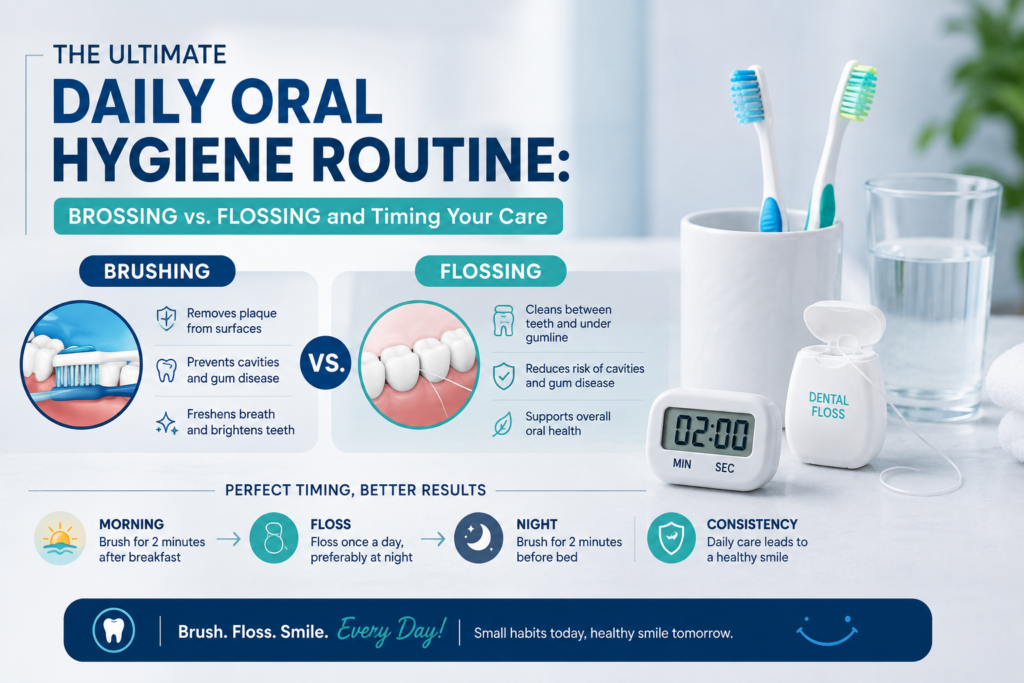
Your Step-by-Step Daily Routine
To put it all together, follow this optimized daily blueprint for a healthier smile:
Morning:
Rinse with water or brush gently to remove overnight bacteria.
Eat breakfast, wait 30 minutes if you consumed acidic items, then do a thorough 2-minute brush.
Evening (The Ultimate Routine):
Step 1: Floss gently between every tooth, curving the floss around the base of each tooth in a C-shape.
Step 2: Brush for two full minutes using a soft-bristled toothbrush and fluoride toothpaste, utilizing gentle circular motions.
Step 3: Spit out the excess toothpaste, but avoid rinsing with water right away. Leaving a thin layer of toothpaste residue on your teeth allows the fluoride to continue protecting your enamel overnight.
Timing Is Everything: When to Brush
Knowing when to brush is just as important as knowing how. Acidic foods and drinks (such as citrus fruits, coffee, wine, and tomatoes) temporarily soften your tooth enamel.
Important Rule: Never brush your teeth immediately after consuming something acidic. Brushing a softened enamel surface can actually wear it away faster.
Wait 30 Minutes: Give your saliva time to neutralize acids and remineralize your teeth before you introduce a toothbrush.
The Ideal Schedule: Brush twice a day for a full two minutes each time—once in the morning (after breakfast, or wait 30 minutes after eating) and once right before bed.
Final Thoughts
Consistency is the secret ingredient to a healthy smile. By flossing first, timing your brushing around meals, and committing to a full two minutes twice a day, you invest in long-term oral and overall health. Your teeth—and your dentist—will thank you!